Christmas toad in the hole in 1 hour!
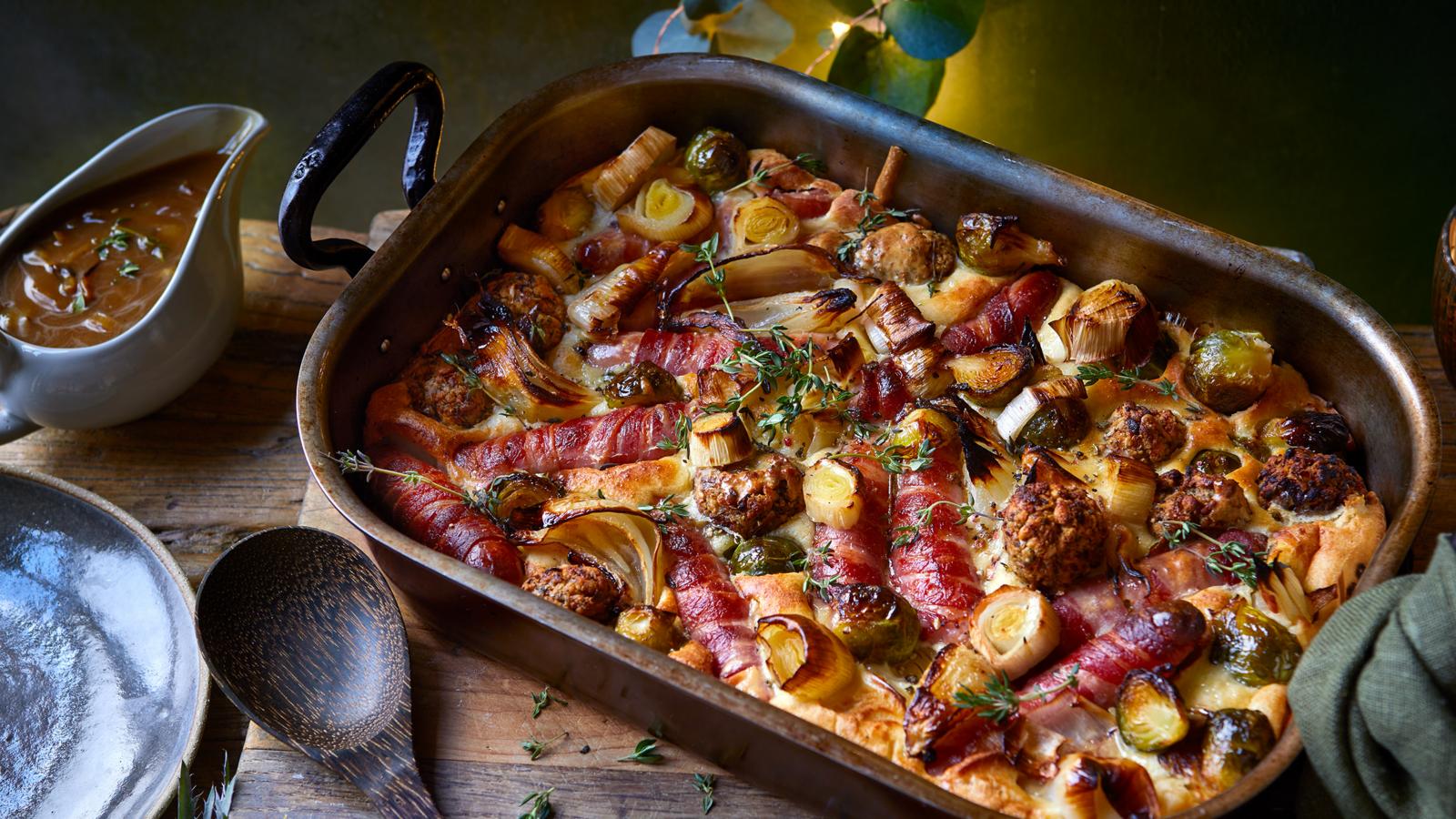
What do you get when you cross pigs in blankets with toad in the hole? The ultimate comfort food mash-up and an ideal dinner for the festive season. This hearty, crowd-pleasing dish brings together two much-loved classics, making it perfect for cosy nights hunkered down at home or for serving to visiting friends and family during the Christmas period. With crisp, golden Yorkshire pudding batter surrounding juicy sausages wrapped in bacon, it’s a warming, indulgent meal that feels both nostalgic and celebratory.
Better still, this recipe is wonderfully flexible. It can easily be made vegetarian by swapping out the pigs in blankets for vegetarian alternatives and using vegetable stock instead of chicken stock in the gravy, without compromising on flavour or festive appeal. This makes it a great option for mixed-diet gatherings where everyone can enjoy a comforting centrepiece.
You’ll need a 23x33cm/9x13in roasting tin with deep sides to allow the batter to rise beautifully around the sausages. Despite its impressive look and rich flavours, this dish is surprisingly straightforward to make. It takes less than 30 minutes to prepare and just over 30 minutes to cook, meaning this delicious Christmas twist on toad in the hole can be on the table in around an hour—perfect for busy festive schedules when you want something special without spending all day in the kitchen.
Christmas toad in the hole- ingredient list;
175g/6oz of sifted plain flour
Four huge eggs from the wild
Full-fat milk, 300 ml/½ pint
Two teaspoons of Dijon mustard
Six rashers smoked bacon with streaks.
Twelve chipolata sausages
Four tablespoons of vegetable or sunflower oil
Peel and chop two onions into wedges.
200g/7oz of onion and sage stuffing, formed into 8 balls
200g/7oz of trimmed Brussels sprouts and two small-medium leeks, sliced into slices that are 1-2 cm/½–¾ thick
Ingredients for the gravy;
25g/1oz of butter
One tablespoon of olive oil
Two sliced onions
One teaspoon of chopped thyme leaves
500ml/18fl oz premium chicken stock; 1 tablespoon plain flour
Worcestershire sauce, two tablespoons
freshly ground black pepper and salt
To serve;
Cranberry sauce
Christmas toad in the hole- step by step instruction guide;
Step 1
Preheat the oven to 220C/200C Fan/Gas 7, allowing it plenty of time to reach the correct temperature before you begin cooking. A properly preheated oven is essential for achieving a well-risen, golden Yorkshire pudding batter, as the initial blast of heat helps it puff up and become light and airy while crisping beautifully around the edges.
Step 2
First, prepare the batter for Yorkshire pudding. Create a well in the centre of a big basin after sifting the flour. Beat the eggs and milk together, then transfer to the bowl and use a balloon whisk to smooth it out. Season thoroughly with salt and freshly ground black pepper after adding the mustard. While you make the additional ingredients, set aside to rest.
Step 3
Using the back of a knife, gently stretch out each bacon rasher to increase its length by roughly one third. This helps the bacon wrap more easily around the sausages and ensures good coverage. Once stretched, cut each rasher in half crossways, then carefully wrap each piece around a chipolata, securing it snugly so the bacon overlaps slightly and stays in place during cooking.
Step 4
Heat 2 tablespoons of sunflower oil in a large roasting tin, making sure the oil is evenly distributed across the base. Carefully add the pigs in blankets, along with the onion wedges and stuffing balls, spreading everything out in a single layer so it roasts evenly. Place the tin in the hot oven and cook for about 20 minutes, turning the ingredients halfway through if needed, until the bacon begins to crisp, the onions soften, and everything is starting to turn a rich, golden brown.
Step 5
Meanwhile, make the gravy. Heat the butter and olive oil together in a sauté or frying pan set over a medium heat, allowing the butter to melt and foam gently without browning. Add the sliced onions and the chopped thyme, stirring to coat them in the fat, then cook for several minutes until the onions are soft, translucent and just starting to caramelise and turn golden at the edges. Sprinkle in the plain flour, stirring well to combine, and cook for a further 30 seconds to remove the raw flour taste. Gradually pour the stock into the pan, a little at a time, stirring constantly to ensure a smooth gravy, then increase the heat slightly and bring the mixture to the boil.
Step 6
Lower the heat and allow the gravy to simmer gently for about 10 minutes, stirring occasionally, until it becomes smooth and thickens slightly to a rich, glossy consistency. Stir in the Worcestershire sauce to deepen the flavour, then season generously with salt and freshly ground black pepper, adjusting to taste. Once finished, remove from the heat and set aside until ready to serve, keeping it warm if needed.
Step 7
When the sausages have been cooking for 20 minutes, carefully remove the roasting tin from the oven. Add the sprouts and leeks to the tin, then drizzle over the remaining 2 tablespoons of oil, tossing everything together so the vegetables are well coated and evenly distributed. Return the tin to the oven and cook for a further 5 minutes, until the sprouts and leeks are just beginning to soften and take on a little colour.
Step 8
Quickly take the roasting tin out of the oven and cover the sausages, stuffing, and veggies with the Yorkshire batter. The batter should be puffy and golden brown after another 20 to 25 minutes in the oven. Serve alongside the cranberry sauce and onion gravy.
Recipe tips-
It’s important not to overcrowd the roasting tin, as packing in too many ingredients will lower the oven temperature around the batter and prevent the Yorkshire pudding from rising properly. The sausages and vegetables should have enough space for the hot oil and batter to work their magic and create light, crisp edges. A larger tin will still work perfectly well, but if you only have smaller tins, it’s far better to divide everything between two tins rather than overcrowd one, ensuring the pudding rises evenly and achieves the best possible texture.